
Sample Week 4- Y4:M4:W4

TOPIC
Physical Health

FOCUS
Food

LEARNING OBJECTIVE
Have I learnt anything about healthy foods in this session?
Session content
- Please read page 2-3 of the guidance (the section on food).
- This session is of paramount importance, especially due to recent research showing that 66% of the food children eat is ultra-processed (cited by Pearson, 2026). Children need to understand some basic knowledge about ultra-processed food so that they are able to make informed decisions as they get more independent, for example:
- *Ultra-processed food gets broken down quickly and so eating them means a person will be hungrier quicker (and vice versa: eating whole food which is broken down slower keeps someone satisfied for longer).
- *Ultra-processed food can be addictive and when you eat it, it can create cravings for it in the future.
- *Help them to make the link between WHAT they eat and HOW THEY FEEL.
- Discussion:
- Pose this question to the class: what are whole foods? (answer: foods that are close to their natural state).
- Within this discussion, if possible, involve the words ‘unprocessed’, and ‘plant based’ foods.
- You might want to use this 5 minute video to find out what ‘whole foods’ and ‘unprocessed’ foods are …it also introduces them to doing a ‘whole food challenge’ in case they fancy trying it at home!
- Recap and explain that processed foods are foods that are NOT in their natural state.
- You may wish them to watch this quick video clip to learn a bit about whole foods: https://youtu.be/1XWTDskw0Iw
- Say that it is relatively hard to avoid food that has had no processing whatsoever, therefore, the message (Spector, 2023) should be that children should avoid ‘ultra processed food’ (food that contains ingredients you wouldn’t add when cooking homemade food, such as chemicals, colourings, sweeteners and preservatives).
- Explain that ‘plant-based’ foods are foods derived from plants (such as fruits and vegetables, wholegrains, pulses, nuts, seeds and oils).
- Explain that some people use the 80/20 rule and try to eat the healthiest/most nutritious of foods for 80% of their week (e.g. they have a day when they eat anything they fancy at the weekend etc).
- Ask them if they like this idea or not?
- Ask: Which do you think would keep you going longer: a banana or a handful of sweets? Why?
- Maybe ask them to vote…
- 🍌🍬
- Then explain that both can be enjoyed, but different foods give our bodies energy in different ways.
- Say: Here are 2 fun-facts:
- Fun fact 1: Some foods are like “quick fuel” for our bodies! Ultra-processed foods (like some sweets, crisps, and sugary snacks) can be broken down very quickly, which means our bodies use up the energy fast and we might feel hungry again sooner. Foods that are less processed (like fruit, vegetables, nuts, and whole grains) take longer for our bodies to break down, helping us feel full and energised for longer.
- Fun fact 2: Some ultra-processed foods are designed to make us want to eat more of them because our brains really enjoy their flavours and textures. That’s why sometimes we might get a strong craving for them…our brains are remembering how tasty they were!
- Gut-friendly foods:
- Explain that on SLIDE 14 there is a list taken from the Gut Brain Solution booklet that shows ‘good’ and ‘bad’ foods to support the gut (friendly bacteria in the tummy) and to help with anxiety.
- Ask them to think about physical signs that your body may not be in the best physical health (e.g. tummy aches, constipation, loose bowels, tiredness etc).
- Explain that it is not often helpful to label foods as ‘good’ and ‘bad’ but you are interested to know if they have heard of (or they eat) the foods on the ‘good’ list.
- Food information:
- Here is some information taken from the booklet about each type of food in case the children are interested. Try to stimulate a conversation about what mean they could make using these ingredients.
- Spinach and Swiss chard are rich in magnesium, which has been shown specifically to reduce anxiety. In studies involving mice, researchers have shown a relationship between magnesium and anxiety, whether these levels are depleted naturally or experimentally.
- Pumpkin seeds contain both zinc and tryptophan. In a study, individuals with anxiety had lower plasma zinc levels compared with control participants. Additionally, zinc antioxidant supplementation was shown to improve anxiety symptoms. Tryptophan is the only amino acid that produces serotonin.
- Berries are bursting with antioxidants and vitamin C, which have been shown to provide anxiety relief. One study found that taking vitamin C daily reduced anxiety symptoms after 14 days and that antioxidants may be useful for both the prevention and reduction of anxiety.
- Avocados are rich in stress-relieving B vitamins. Supplementation of these vitamins have been linked to improved mood in some people.
- Chia seeds and hemp seeds contain high levels of omega-3 fatty acids, which have been shown to reduce inflammation and anxiety in medical students during exams7 . Hemp seeds were also shown to reduce anxiety in postmenopausal rats.
- Researchers have found that eating high fibre foods may reduce the effects of stress on our gut and behaviour. Levels of stress and anxiety-like behaviour were reduced when short-chain fatty acids (produced when friendly gut bacteria ferment fibre in the colon) were fed to mice.
- Turmeric contains curcumin, a compound studied for its role in preventing anxiety disorders. In one study, 20 mg/kg of curcumin produced significant anti-anxiety effects in stressed mice compared to those given a lower dose.
- Brazil nuts are high in selenium — repletion of selenium to normal levels reduced anxiety scores in clinical trials. Brazil nuts are also a good source of vitamin E — some research has suggested that low levels of vitamin E may be associated with increased anxiety at adulthood.
- Chocolate has been deemed beneficial for anxiety and irritability. A study of high anxiety volunteers showed that eating dark chocolate reduced stress hormone levels and relieved feelings of anxiety.
- As complex carbohydrates that are abundant in tryptophan, chickpeas have been proven to be a healthier way than drugs to naturally raise serotonin levels in the brain.
- Task: Gut friendly foods
- Go through the list (bullet points on slide) and ask them to do thumbs up if they have eaten it, thumbs to the side if they have heard of it (but not eaten it) and thumbs down if they have not heard about it or eaten it.
- Introduce them to the word ‘Microbiome’ (shown on SLIDE 14) and explain that it refers to the friendly bacteria in our tummies that are a community of gut microbes that are microscopic (very small) bugs in our intestines; there are thousands of them. They are amazing as they pump out chemicals that are vital for our bodies, but they are working at their best when we eat certain types of food (that keep our gut healthy) and this helps our immune system (the system in our body that protects us from illness etc). They can also produce chemicals (e.g. something called serotonin) to protect the brain that can help us to feel happier.
- Explain that serotonin is a mood stabilising hormone and is associated with feeling of wellbeing, confidence and also linked to the sleep cycle and digestion.
- Ask them to find out what types of food are gut healthy (e.g. fermented food) by researching this themselves.
- Explain that they might find out some new foods that they have never heard of before, e.g. sauerkraut, but also some things they will already know about, e.g. live yogurt.
- Say that they will learn more about this in the Year 5 CORE MH sessions.
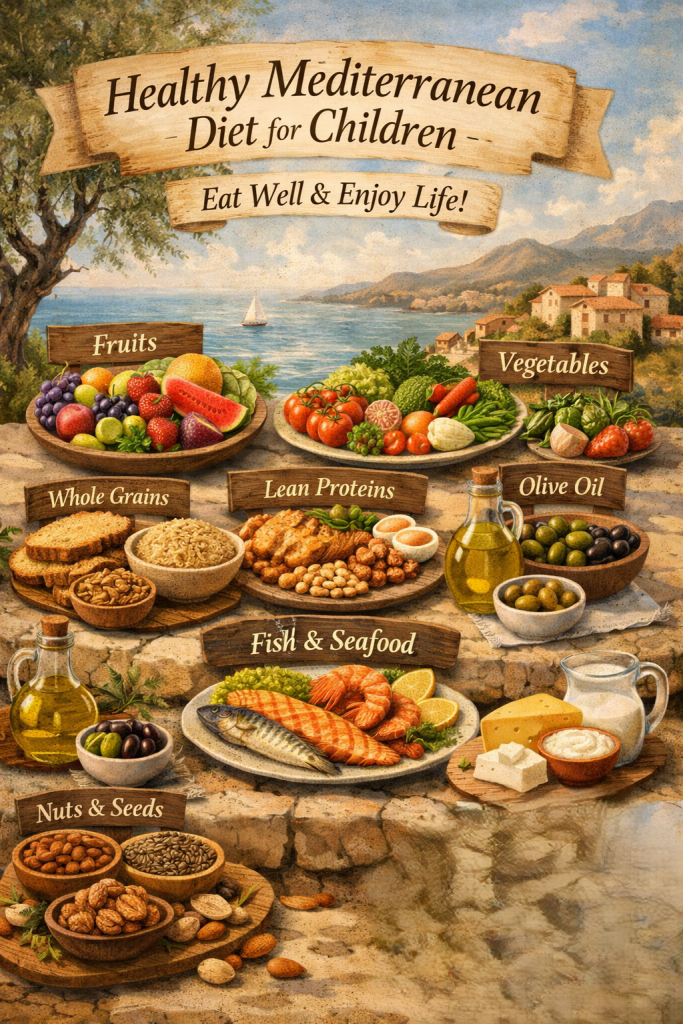
- Mediterranean diet:
- Ask: Have you heard of the Mediterranean diet? Ask them to show with their thumbs: up (yes), down (no), to the side (not sure).
- Say: I’m going to say a long word…(maybe write this on the board): ‘Anti-inflammatory’ .
- Ask: Does anyone know what it means? Maybe give them time to think-pair-share.
- Share: Anti-inflammatory means foods that can help your body stay healthy by calming irritation and helping to reduce swelling inside your body. The Mediterranean diet has been shown to be good at this…and helping to improve our mood and happiness levels 🙂
- Continue by saying: Anti-inflammatory diets have lots of whole, unprocessed foods, including fruits, vegetables, whole grains, nuts and healthy fats and legumes (like beans, peas, and lentils, that grow inside pods and give your body important nutrients like protein and fibre).
- Say: Can you think of times when you have eaten foods like this? Have you ever eaten an olive? A big thumbs up if you have! 🙂
- (Optional) Show them the image below and discuss:
- Now let’s talk about HOW we eat….not just about WHAT we eat:
- Mindful Eating:
- Remind them to take their time when eating so that this aids their digestion (Digestion is the way your body breaks down the food you eat into tiny pieces so it can use the nutrients for energy, growth, and keeping you healthy. It takes the food you eat, breaks it into tiny pieces, sends the useful parts around your body, and gets rid of anything you don’t need).
- Here’s a video to end this session on, in case they want to do some mindful eating during the school holidays:
- Ask each child to put a counter in the SAPs (self-assessment pots) to show if they have achieved the LO and record results. If you get the opportunity, please ask them what they have learnt and make a note of anything they mention.
- Happy Christmas and Happy New Year from Suzanne & Kobi!

Related PSHE Programmes of Study
- 2HE1
- 2HE2
- 2HE3
- 2HE4