Sample Week 3- Y4:M4:W3

TOPIC
MH Conditions

FOCUS
Body Image

LEARNING OBJECTIVE
Do I know how to build a positive body image?
Session content
- Please read page 4-5 of this guidance on body image.
- This session aims to create a safe and inclusive environment where children feel comfortable sharing their thoughts. Please use age-appropriate language to explain concepts like body image, self-esteem, and societal influences. Emphasise that everyone is unique and valuable, and avoid focusing on physical appearance. Model positive body image by sharing examples of qualities you value in yourself that aren’t appearance-based. Please also be mindful of diverse backgrounds, abilities, and experiences in the classroom.
- Discussion:
- Recap the last session on body image by reminding them of the card they made with 5 things to remember to encourage a positive body image in themselves (recap using SLIDE 12).
- Remind them that body image refers to the picture you imagine in your mind about what your body looks like, and also your attitude towards yourself (e.g. your thoughts, feelings and beliefs relating to your body). A simple definition would be: It’s about how we see and feel about our bodies.
- Say that your body image can be influenced by society and the media (like TV adverts, social media and TV shows etc) and also by friends and family.
- Share that sadly, a negative or unhealthy body image can contribute to low self-esteem and can affect well-being (which is why we are covering the topic at school).
- However, say that having a healthy/positive body image involves being comfortable with, and accepting the body you have, knowing that it is not perfect (no-one is) and caring for it. A positive body image means appreciating your body for what it can do and valuing your inner qualities too.
- Explain that building a positive picture of yourself and your inner qualities is likely to build self-esteem. Also, thinking of all the amazing things your body can do is likely to help too, e.g. running, drawing, fighting infection etc.
- Explain that some people find it hard to accept their own body and this is a really hard way to live, it’s called body dysmorphia disorder (or BDD).
- Say that there is help for this condition here: https://bddfoundation.org/ (on SLIDE 13).
- Task 1: 3 things
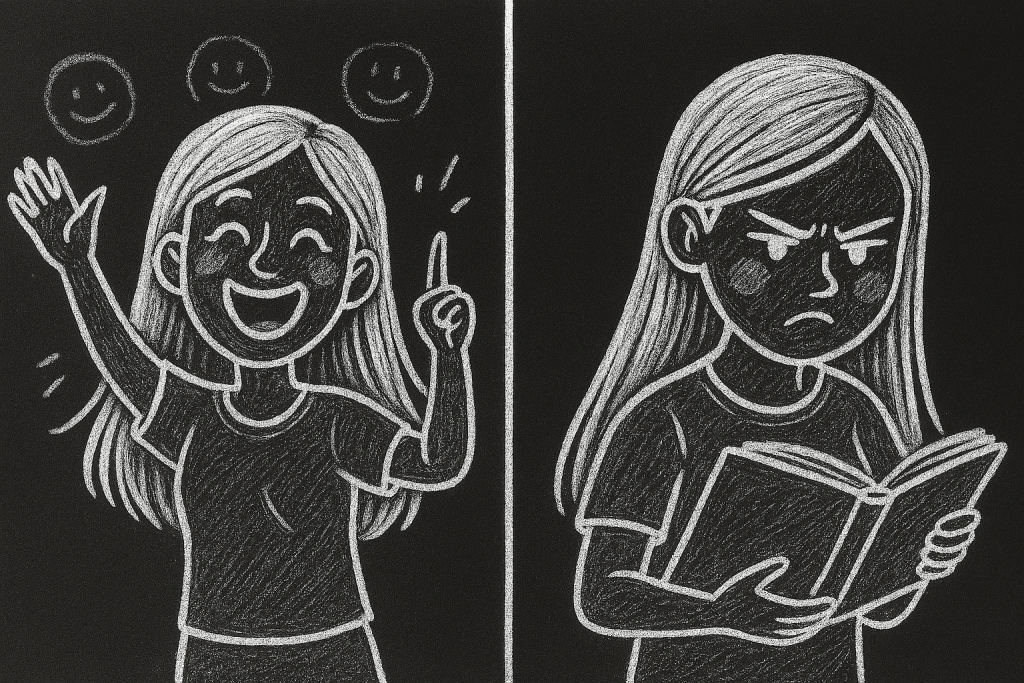
- Use SLIDE 13 and provide each child with a piece of black paper and some pastel-coloured chalks to draw a picture/image or write words about 3 things that they value about themselves, e.g. an area of their personality, a talent or gift, their smile, etc.
- Model this by sharing an example you have created about yourself. For instance: “I value my ability to make people laugh, my love for reading, and my determination.”:
- Task 2: Quiz:
- This is a whole-class quiz with true/false or multiple-choice questions.
- You may like to encourage the children to use hand signals for this quiz rather than having to write down the answers (e.g., thumbs up for true, thumbs down for false) or coloured cards/mini-whiteboards/post-its for answers: a, b, c).
- After each question, briefly explain the correct answer and reinforce positive messages…and allow them to share any ideas/examples they wish to.
- Questions:
- 1) True or False: Everyone’s body is unique, and that’s a good thing. (answer: true)
- 2) What’s more important: a) how your body looks, b) what it can do, c) what colour your eyes are? (answer: b, although maybe not everyone feels like that?)
- 3) Which of these helps build a positive body image? (a) Comparing yourself to others, (b) Appreciating your talents, (c) Watching lots of TV ads. (answer: b)
- 4) True or False: Being kind to yourself when you make a mistake can help you feel better about yourself. (answer: true)
- 5) Which is an example of looking after your body? (a) Getting enough sleep, (b) Skipping meals, (c) Watching TV all day. (answer: a)
- 6) What should you do if you feel bad about how you look? (a) Talk to a trusted adult, (b) Keep it to yourself, (c) Compare yourself to others. (answer: a: because there is so much support out there!).
- 7) True or False: Comparing yourself to others helps you build a positive body image. (answer: false)
- 8) What is something that makes someone special? (a) Their talents, (b) Their kindness, (c) Both of these. (answer: c).
Task 3: 5 steps to a positive body image:
- To end this session, say they are becoming an expert on this topic after learning so much and so you wondered if they could have a chat in pairs/groups to come up with 5 key things that someone could do (5 steps) so that they begin to build a positive body image, e.g. try not to compare themselves to others.
- When they have had 5 minutes, collect their ideas and add any of these if they haven’t mentioned them (I have made these steps after researching and being informed by guidance from Mentally Healthy Schools, The Children’s Society and the NHS):
- 1) Appreciate what your body can do
- Examples:
- Celebrate physical abilities like running, jumping, or dancing.
- Notice how your body helps you enjoy hobbies, like drawing or playing an instrument.
- Think about how your body helps you connect with others, like cuddling a friend or smiling.
- 2) Focus on your inner qualities
- Examples:
- Write down three things you like about yourself that aren’t about appearance (e.g., kindness, creativity, sense of humour).
- Compliment a friend on their personality or talents instead of how they look.
- Share something you’re proud of that shows your character, like helping someone or learning a new skill.
- 3) Be kind to yourself (we can call this ‘self-care’)
- Examples:
- Practise saying something nice to yourself in the mirror each morning, like “I’m a good friend” or “I’m brave.”
- When you make a mistake, remind yourself that nobody’s perfect and it’s okay to try again.
- Take care of your body by eating nutritious snacks, drinking water, and getting enough sleep.
- 4) Be media savvy:
- Examples:
- Talk with an adult about how pictures in magazines or on social media might be edited.
- Play a game where you spot unrealistic images in adverts or TV shows.
- Follow or watch content that celebrates diversity and shows people of all shapes, sizes, and abilities.
- 5) Surround yourself with other people who have a positive body image:
- Examples:
- Spend time with friends who make you feel good about yourself.
- Join a club or activity where you can focus on what you enjoy, like sports, art, or music.
- Create a ‘positivity jar’ where you and your family/friends write down things you like about each other.
- 💜I hope you have enjoyed delivering this session. You are likely to have done a lot of good for the children in your class by allowing them time to reflect on this topic and allowing for useful conversations. I hope you have been able to look after yourself and maybe gain some ideas yourself about how to maintain a positive body image! 💜
- Ask each child to put a counter in the SAPs (self-assessment pots) to show if they have achieved the LO and record results.
Related PSHE Programmes of Study
- 2H25
- 2H27
- 2H28