
Year Rec CORE Mental Health
Welcome! This page introduces you to the Reception content for the CORE MH curriculum. Here is an overview of what is covered:
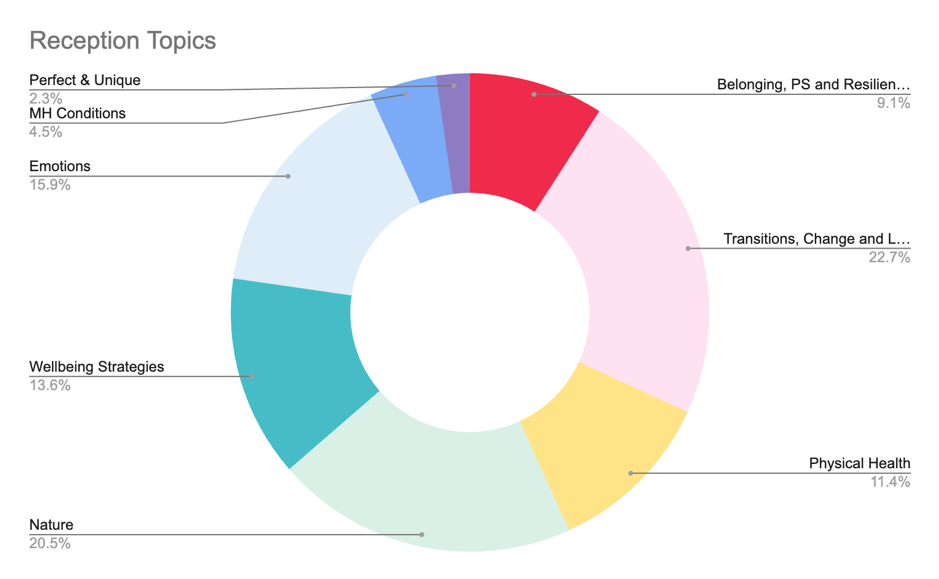
N.B. PS=Problem-solving
- Tasks using the vocabulary and language associated with wellbeing or mental health, for example: wellbeing, anxiety, angry, calm, worry etc. so they are more equipped to talk about their feelings and to name/describe their mental states.
- Themes related to penguins because penguins and other animals have been linked to feelings of happiness. Bergman (2021) discusses ‘penguin glow’ and how penguins teach us about resilience and hope.
- Themes related to changes, loss, self-care, problem-solving and resilience, health, emotions, anxiety and being creative and unique.
- Topics about transition, loss and changes as, having started school, they have many new experiences to contend with that could affect their mental health. Please refer to the ‘Teacher Guidance’ section of the CORE MH Curriculum for lots of guidance around navigating loss with your students according to their age.
- Creative activities (to allow you to deliver them in allocated art lessons).
- A breathing activity that can be incorporated into a PE lesson.
- Working with images from Project Soothe (I have permission from the author Stella Chan, for these images to be used).
- A focus on nature so that children can begin to learn using the world around them and familiar contexts.
- Themes about building caring relationships between peers and adults
- Sessions with a class teddy bear. If you can’t find a teddy, however, please use the slides I have prepared of photos of my own teddy bear (Hugo) but you will need a teddy bear for someone in the class to take home for the summer holidays next July.
- N.B. THERE 44 WEEKLY SESSIONS WITHIN THIS CONTENT, WHICH IS MORE THAN THE NUMBER OF TEACHING WEEKS IN A YEAR (BECAUSE OF HALF TERMS AND HOLIDAYS). THIS IS TO ALLOW YOU TO MIX AND MATCH AND SELECT THE SESSIONS BASED ON WHAT CONTENT YOU THINK YOUR CLASS NEED.
- The Overview below (using red button) has hyperlinks to each of the sessions so you can access them in one click…
Preparing for Reception CORE MH:
Here are some tasks that you can do in early September (or whenever your school starts the CORE MH Curriculum) to use to support your class and their mental health and aid the transition of starting school (or beginning this programme): Social stories, create a calm-down area in the classroom, make a visual timetable, source some mood journals, and find 3 self-assessment pots and counters (all the details are below):

Social Stories
In the first week of September or before, provide each child with a social story for their parent(s)/carer(s) to add to and read to familiarise them about school. N.B. If your school is starting the CORE MH Curriculum in January or April, this is NOT required.
Resources
- Appendix 1 printed or emailed out to children’s addresses
Create a calm-down area
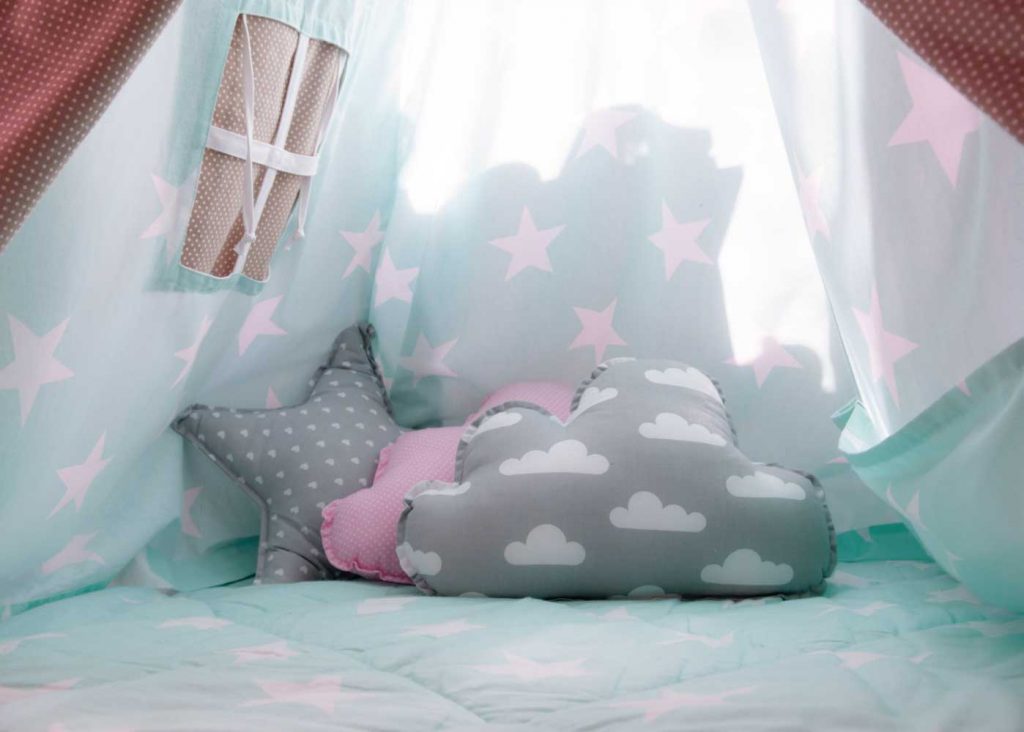
The calm-down area can simply be a corner of your classroom that is a designated area for children to access if they feel the need to calm down. Ideally, this would consist of some comfortable chairs, a rug and a variety of resources for children to self-regulate and have access to sensory objects to soothe themselves.
Examples of Resources
- Soft toys to stroke, playdough to mould, rice or water/glitter in jars, variety of textures and fabrics
- Natural objects such as pebbles, shells, sorting trays with beads and buttons
- Headphones to provide quiet, pastel coloured pictures
What are Social Stories?
Social stories, created by Carol Gray in 1991, were originally designed to improve the social skills of children with autism spectrum disorders (ASD). However, they are a useful aid to allow all children to process their feelings about starting school so that it is less daunting for them. During their first experiences of school, they will be armed with ideas about what school is all about and more prepared for what is likely to happen each day. Social stories are ‘a simple and dramatic way to support children with a variety of learning styles in a process that leads to more successful school experiences’ (Briody & McGarry, 2005).
- Design a social story cartoon strip for each of the children in the class (for parent(s)/carers to add their child’s name and their photos to the script and template you have provided – see template in Appendix 1).
- Add any photos that you have of the classroom, the playground etc.
- Encourage the parent(s)/carers of the children in your new class to read this social story to their child/ren in the few weeks before school starts or during the first few weeks of starting school.
- This is a collaborative effort that sets the scene for a positive relationship between parents/carers and the school.

A Visual Timetable
Use of a visual timetable is recommended. Preparing one of these using cards and Velcro would be useful at the start of the year. This allows children to feel safe because they know what to expect and can prepare themselves a little for what the day ahead may be like.
Resources
- Velcro
- Card
- Pictures

Source a Mood Journal
Please source a ‘mood journal’ (a book with plain paper) for every child at the start of the term. The mood journal is their own personal resource, so as a teacher you won’t mark it or even look at it, unless a child wishes you to. A child does not need to write, they can draw, doodle or just sit and reflect in their mood journal.
Resources
- A book with plain paper
- Use previous mood journal, if applicable

Make 3 Self-Assessment Pots
Make 3 self-assessment pots (SAPs) labelled with these words ‘Yes’, ‘Not sure’ and ‘No, not yet’, and find one counter for each child. This makes assessment easier for you and gives you a general idea of where the learning is in each session, for example, how many children felt they had (‘yes’) and hadn’t (‘no, not yet’) achieved the learning objective and how many children may have experienced confusion around the task (‘not sure’).
Resources
- Tins, jam jars or pencil pots
- Counters or coins

Provide Feedback
I would be very grateful if you could keep a record on the platform of how the sessions have gone, and how the children have interacted with the self-assessment pots. Please use the ‘SAP and feedback’ function for this.
What to record
- How many counters are in each pot
- Note on how you felt the session went
- Engagement levels
- Misconceptions
- Suggestions for improvement
Assessment of CORE MH:
- There are 2 documents for you to complete that will help you assess impact from using this Curriculum:
- Teacher Assessment Record (or TAR) and Progression & Development Record (PDR).
- This Child Survey SDQ is a wellbeing survey designed for you to assess children at the beginning, middle and end of this academic year:
Here is a list of all of the resources that you will need to deliver ALL of the Reception content for the year: (for those of you that wish to be prepared! Otherwise, they are simple enough for you to collect each week) 🙂
- resources for the calm-down area,
- jar,
- marbles.
- mood journals,
- art supplies (card, paper, pencils, crayons, paints, scissors, glue, paints, paintbrushes, glitter),
- Velcro (for visual timetable),
- construction toys,
- a bin bag containing: a coat, a hot drink, gloves, hat, hot water bottle, scarf,
- camera or ipad,
- foil tins from takeaways (for fairy gardens),
- leaves,
- pinecones, twigs, feathers, grass, pebbles, shells, stones
- shoe boxes,
- variety of images printed from Project Soothe (Gallery – Soothe (projectsoothe.com),
- toy baby doll, blankets (one for each child) (optional),
- soft toy (one for each child) (optional),
- big soft teddy bear (for class teddy sessions),
- an old mug (that you don’t mind breaking),
- satsumas (one for each child),
- toilet rolls,
- white scarves,
- white tissues paper strips.
- Ice cubes wrapped in kitchen roll,
- Books: (find second-hand copies to keep the price down?):
- Penguin Problems by John & Smith (2017) Penguin Problems (Animal Problems): John, Jory, Smith, Lane: 9780553513370: Amazon.com: Books
- Stick & Stone by Ferry & Lichtenheld (2018) Stick and Stone Board Book : Ferry, Beth, Lichtenheld, Tom: Amazon.co.uk: Books
- Blue Penguin by Horacek (2016) Blue Penguin: Amazon.co.uk: Horácek, Petr, Horácek, Petr: 9781406366013: Books
- Be Brave Little Penguin by Andreae & Parker (2017): Be Brave Little Penguin: Giles Andreae and Guy Parker-Rees : Andreae, Giles, Parker-Rees, Guy: Amazon.co.uk: Books
- The Sad Book by Michael Rosen (2011): Michael Rosen’s Sad Book : Rosen, Michael, Blake, Quentin: Amazon.co.uk: Books
- pots of warm water,
- sweet orange oil,
- 2 water trays: cold water and warm water,
- blue/green mat,
- red/orange mat,
- spiky plastic dog toys,
- sponge,
- fingerprint ink pad,
- blue tac,
- balloon,
- bicarbonate of soda,
- white vinegar,
- teaspoon,
- small funnel,
- 4 small pots of flowers,
- magnifying glasses x12,
- a puppet,
- tray,
- rice,
- pebbles,stones,
- bucket,
- small trowel,
- masking tape,
- wipes,
- a couple of packets of tissues (one tissue for each child),
- Sand tray(s),
- spaghetti,
- beads,
- buttons,
- miniature cars, toy animals, people, buildings,
- Appendices 1-7.