
Year 6 CORE Mental Health
Welcome! This page introduces you to the Year 6 content for the CORE MH curriculum. Here is an overview of what is covered:
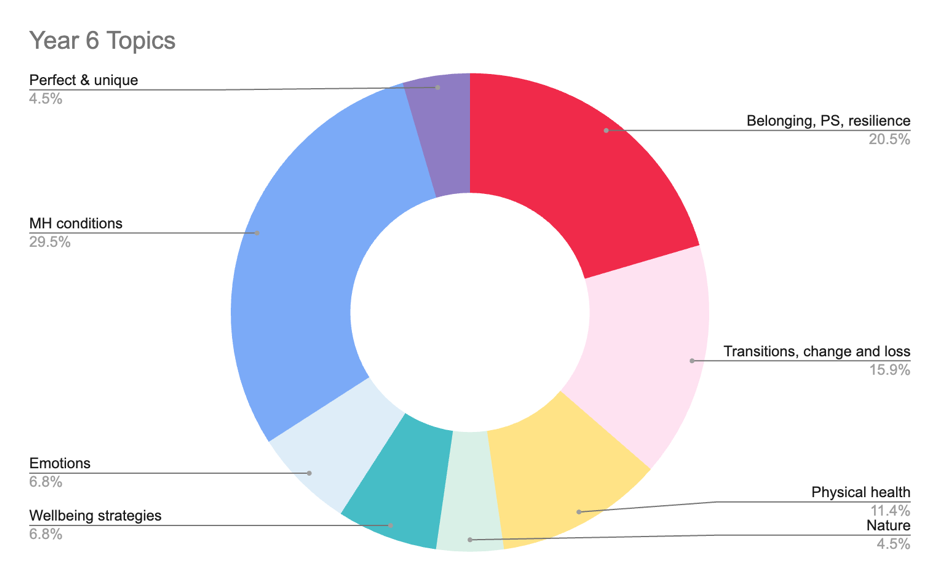
N.B. PS = Problem-solving
Topics covered in year 6
- The teenage brain and hormones.
- Stigma, related to poor mental health.
- Gender, sex and romantic feelings are included.
- Sleep and food in relation to physical and mental health
- Exercise and endorphins
- Divorce and loss
- Climate change
- The link between alcohol and drugs and mental health.
- What psychosis is and some signs and symptoms of it (This is not addressed in a scary way but informative and with an emphasis on recovery).
- Bipolar, self-harm and eating disorders are touched upon (not in very much detail).
- Disability and mental health. Children are encouraged to use empathy in their lives to learn to understand everyone and promote inclusion and diversity.
- How to foster good friendships and develop resilience, especially in relation to technology, testing and using iPhones.
- Knowledge about emotional regulation and naming feelings to tame them.
- Information related to RSHE is shared in Year 6 and they are taught to identify body parts, such as the external genitalia and internal reproductive organs in males and females and about the process of puberty, personal hygiene and first aid. The processes of reproduction and birth as part of the human life cycle are covered in a basic way, how babies are conceived and born, preventing a baby being made, and how babies need to be cared for.
- There are sessions about the transition to High school or Year 7 (if in a Middle School) so that they can mentally and pro-actively prepare for any changes.
- N.B. THERE 44 WEEKLY SESSIONS WITHIN THIS CONTENT, WHICH IS MORE THAN THE NUMBER OF TEACHING WEEKS IN A YEAR (BECAUSE OF HALF TERMS AND HOLIDAYS). THIS IS TO ALLOW YOU TO MIX AND MATCH AND SELECT THE SESSIONS BASED ON WHAT CONTENT YOU THINK YOUR CLASS NEED.
- The Overview below (using red button) has hyperlinks to each of the sessions so you can access them in one click…
Preparing for Year 6 CORE MH:
Here are some tasks that you can do to in early September (or whenever your school starts this CORE MH Curriculum) to support your class and their mental health: create a calm-down area in the classroom, make a visual timetable, source some mood journals, and find 3 self-assessment pots and counters (all the details are below):

Optional Summer Homework
N.B. If your school starts the CORE MH Curriculum in January or April, this activity is NOT required. In addition, it will not be required if this is the first year your school is using the CORE MH Curriculum. If this is the second year of the CORE MH Curriculum, then your children may have been given some (optional) homework over the summer by their Year 5 teacher. However, you do have the option to set this homework in early September if you think it has some worth:
- Details:
- Children were asked to to do a quick bit of research over the summer holidays and just to find out one example of a local organisation (in their area) that is there to support the mental health of children and/or young people.
- They were asked to write down a few details about this organisation and know a few things about what they do and the services they offer or find a leaflet or an online ad to print out to bring into school in September. There should be no expectation that they share this though unless they wish to.
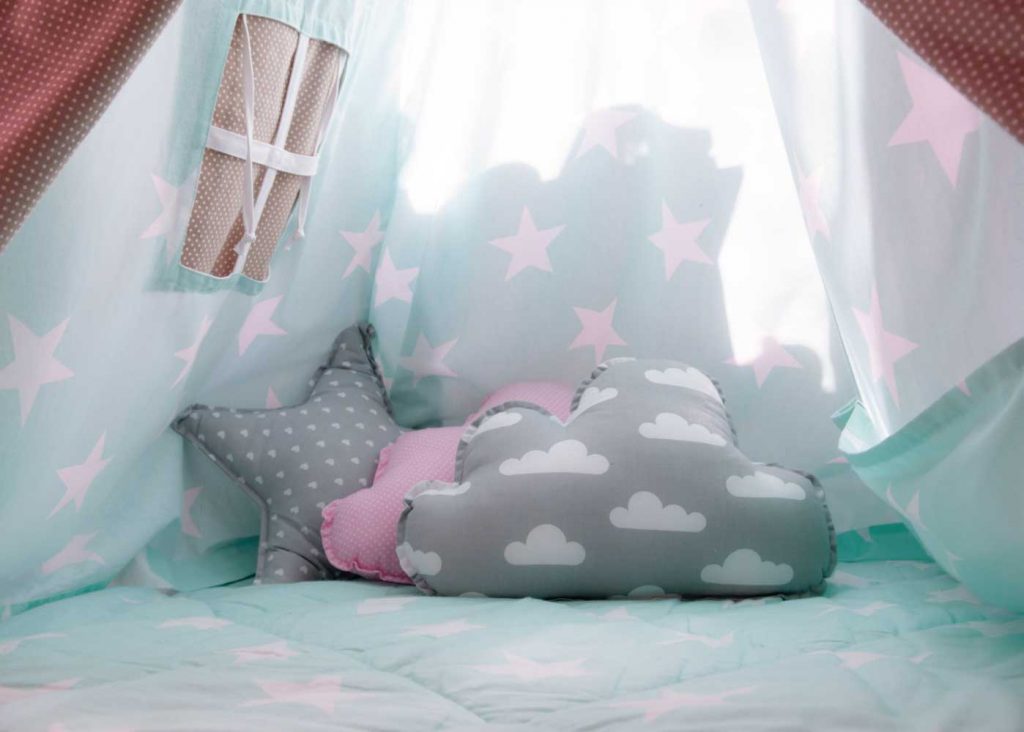
Create a calm-down area
The calm-down area can simply be a corner of your classroom that is a designated area for children to access if they feel the need to calm down. Ideally, this would consist of some comfortable chairs, a rug and a variety of resources for children to self-regulate and have access to sensory objects to soothe themselves.
Examples of Resources
- Soft toys to stroke, playdough to mould, rice or water/glitter in jars, variety of textures and fabrics
- Natural objects such as pebbles, shells, sorting trays with beads and buttons
- Headphones to provide quiet
A Visual Timetable
Use of a visual timetable is recommended. Preparing one of these using cards and Velcro would be useful over the summer. This allows children to feel safe because they know what to expect and can prepare themselves a little for what the day ahead may be like.
Resources
- Velcro
- Card
- Pictures
Source a Mood Journal
Please source a ‘mood journal’ (a book with plain paper) for every child prior to the start of the term (or ask them to continue to use the one from the previous year if there are still pages left in it). The mood journal is their own personal resource, so as a teacher you won’t mark it or even look at it, unless a child wishes you to. A child does not need to write, they can draw, doodle or just sit and reflect in their mood journal.
Resources
- A book with plain paper
- Previous mood journal, if applicable

Make 3 Self-Assessment Pots
Make 3 self-assessment pots (SAPs) labelled with these words ‘Yes’, ‘Not sure’ and ‘No, not yet’, and find one counter for each child. This makes assessment easier for you and gives you a general idea of where the learning is in each session, for example, how many children felt they had (‘yes’) and hadn’t (‘no, not yet’) achieved the learning objective and how many children may have experienced confusion around the task (‘not sure’).
Resources
- Tins, jam jars or pencil pots
- Counters or coins

Provide Feedback
I would be very grateful if you could keep a record on the platform of how the sessions have gone, and how the children have interacted with the self-assessment pots. Please use the ‘SAP and feedback’ function that prompts you to add this feedback after every session.
What to record
- How many counters are in each pot
- Note on how you felt the session went
- Engagement levels
- Misconceptions
- Suggestions for improvement
Assessment of CORE MH:
- There are 2 documents for you to complete that will help you assess impact from using this Curriculum:
- Teacher Assessment Record (or TAR) and Progression & Development Record (PDR).
- This Child Survey SDQ is a wellbeing survey designed for you to assess children at the beginning, middle and end of this academic year:
Here is a list of all of the resources that you will need to deliver ALL of the Year 6 content: (for those of you that wish to be prepared! Otherwise, they are simple enough for you to collect each week) 🙂
- mood journals
- art materials, including marker pens, scissors, large sheets of paper, glue, etc.
- Yoga/P.E. mats
- Rulers (one for each child),
- small stickers,
- mini whiteboards,
- timer (set for 5 mins),
- post-it notes,
- Dice x6.
- Monopoly or pretend money (£1, £5, £10, £100).
- punnet of blueberries
- collection of an assortment of buttons,
- Large plastic jar- ping pong balls, small stones, sand, lemonade.
- Blindfolds, earplugs or noise-cancelling headphones, cotton gloves or textured gloves, crutches (if available), simulation glasses or goggles that mimic visual impairments, objects with various textures (smooth, rough, soft).
- iPads (as many as you have),
- Selection of different types of seeds, biodegradable pots, compost.
- 2 eggs (one raw and one hard-boiled),
- 2 plates,
- wipes,
- Appendices 51-62
- Book: Family Break-up: My Family’s changing by Pat Thomas