
Year 3 CORE Mental Health
Welcome! This page introduces you to the Year 3 content for the CORE MH curriculum. Here is an overview of what is covered:
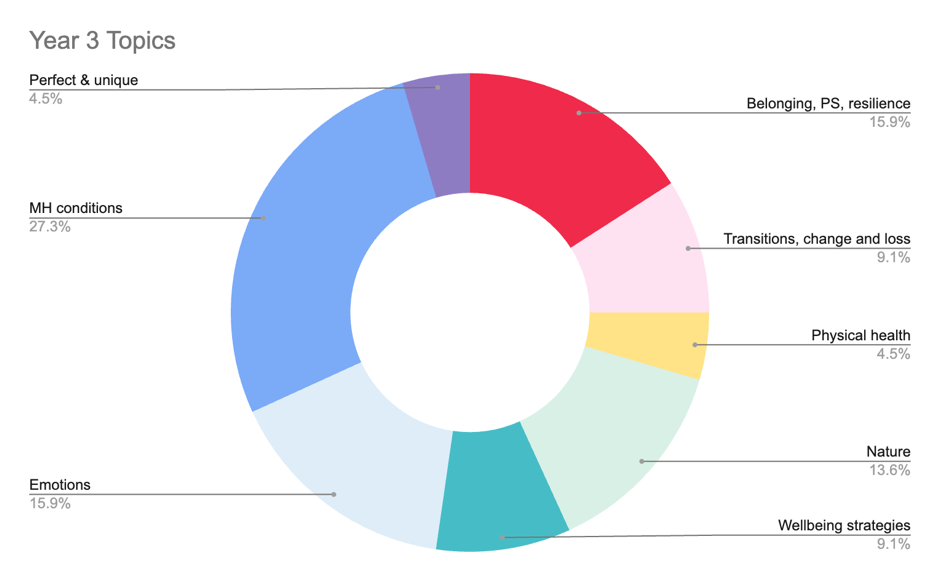
N.B. PS=Problem-solving
- Now that the children are older, there is more complex language and terms being introduced to them so that mental health education is delivered in an open and clear way (not patronising them by avoiding using the correct language).
- There is an emphasis on mental health conditions, and children continue to learn about how to support any anxious feelings they experience, and are also introduced to what depression is, body image, phobias, medication and self-harm.
- There is a focus on problem-solving, especially in relation to cyberbullying and social media.
- Resilience is a skill that is emphasised and loss, death (and bereavement) and the impact on our mental health from experiencing difficult events is introduced too.
- Ideally, by KS2 children should be being pro-active about their own mental health and recognising signs of it slipping low and then reaching out for help themselves (they learn self-soothing strategies) and talking to whoever they feel comfortable to talk to.
- N.B. THERE 44 WEEKLY SESSIONS WITHIN THIS CONTENT, WHICH IS MORE THAN THE NUMBER OF TEACHING WEEKS IN A YEAR (BECAUSE OF HALF TERMS AND HOLIDAYS). THIS IS TO ALLOW YOU TO MIX AND MATCH AND SELECT THE SESSIONS BASED ON WHAT CONTENT YOU THINK YOUR CLASS NEED.
- The Overview below (using red button) has hyperlinks to each of the sessions so you can access them in one click…
Preparing for Year 3 CORE MH:
Here are some tasks that you can do to in early September (or whenever your school starts the CORE MH Curriculum) to support your class and their mental health: create a calm-down area in the classroom, make a visual timetable, source some mood journals, and find 3 self-assessment pots and counters (all the details are below):
Their Year 2 (or Yr1/Yr2) teacher may have asked them to choose one sustainability-related thing to do over the summer holiday. Although, if this is your first year of CORE MH this won’t have happened so, in early September, you could ask them to complete this if they wish and have time to do it during September (you will ask them about this in early October). Please make it optional though. N.B. If you school started the CORE MH Curriculum in January or April this activity is NOT required.

Sustainability Summer homework
- N.B. If your school starts the CORE MH Curriculum in January or April, then this activity is NOT required.
- Ask the children about their knowledge of composting and recycling. What is compost? A mixture of ingredients used to improve soil. Say that soil can be decomposing plant and food waste, and the focus of composting is to recycle organic materials.
- Hopefully your school will have compost bins, but this homework is designed to encourage children to learn about what materials they can compost at home and what the benefits might be. It is also designed to encourage an enthusiasm to recycle for the benefit of living things (this links to the PSHE PoS: 1L3).
- Examples of tasks they can engage with are: composting banana skin, leaving orange peel in their garden for butterflies, making birdfeed, recycling plastic, glass, biodegradable wipes etc. They can decide to focus on butterflies, birds, worms (composting) or recycling.
- Encourage them to engage in a little research about how to compost, recycle or feed in their chosen area.
Create a calm-down area
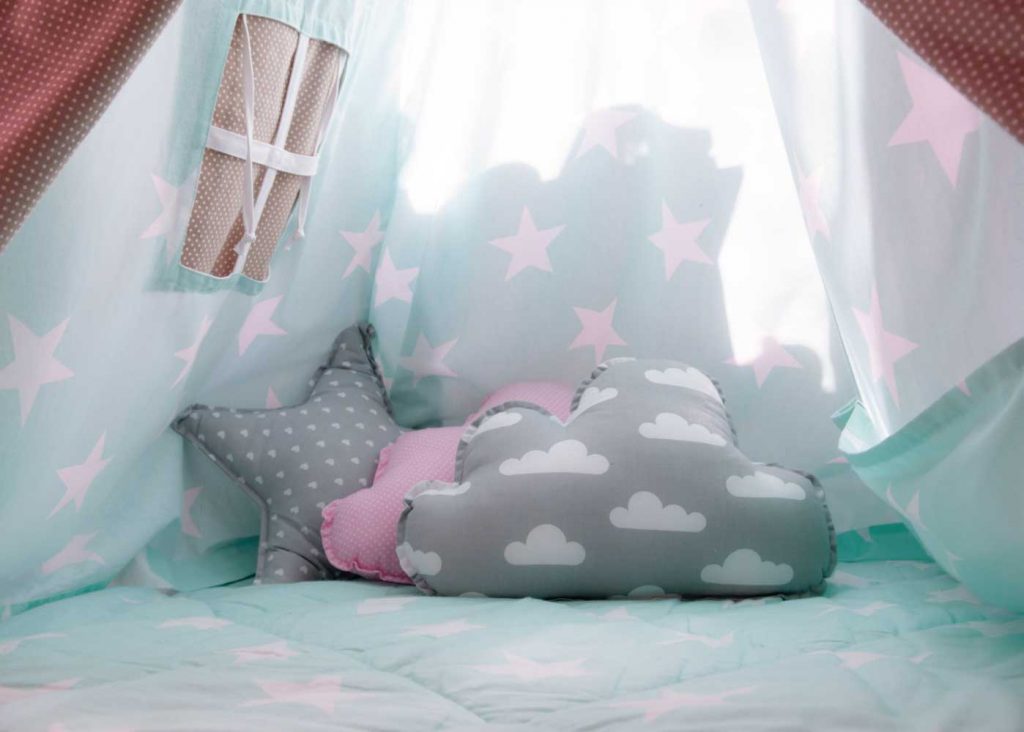
The calm-down area can simply be a corner of your classroom that is a designated area for children to access if they feel the need to calm down. Ideally, this would consist of some comfortable chairs, a rug and a variety of resources for children to self-regulate and have access to sensory objects to soothe themselves.
Examples of Resources
- Soft toys to stroke, playdough to mould, rice or water/glitter in jars, variety of textures and fabrics
- Natural objects such as pebbles, shells, sorting trays with beads and buttons
- Headphones to provide quiet, pastel coloured pictures

A Visual Timetable
Use of a visual timetable is recommended. Preparing one of these using cards and Velcro would be useful over the summer. This allows children to feel safe because they know what to expect and can prepare themselves a little for what the day ahead may be like.
Resources
- Velcro
- Card
- Pictures

Source a Mood Journal
Please source a ‘mood journal’ (a book with plain paper) for every child prior to the start of the term (or ask them to continue to use the one from the previous year if there are still pages left in it). The mood journal is their own personal resource, so as a teacher you won’t mark it or even look at it, unless a child wishes you to. A child does not need to write, they can draw, doodle or just sit and reflect in their mood journal.
Resources
- A book with plain paper
- Previous mood journal, if applicable

Make 3 Self-Assessment Pots
Make 3 self-assessment pots (SAPs) labelled with these words ‘Yes’, ‘Not sure’ and ‘No, not yet’, and find one counter for each child. This makes assessment easier for you and gives you a general idea of where the learning is in each session, for example, how many children felt they had (‘yes’) and hadn’t (‘no, not yet’) achieved the learning objective and how many children may have experienced confusion around the task (‘not sure’).
Resources
- Tins, jam jars or pencil pots
- Counters or coins

Provide Feedback
I would be very grateful if you could keep a record on the platform of how the sessions have gone, and how the children have interacted with the self-assessment pots.
What to record
- How many counters are in each pot
- Note on how you felt the session went
- Engagement levels
- Misconceptions
- Suggestions for improvement
Assessment of CORE MH:
- There are 2 documents for you to complete that will help you assess impact from using this Curriculum:
- Teacher Assessment Record (or TAR) and Progression & Development Record (PDR).
- This Child Survey SDQ is a wellbeing survey designed for you to assess children at the beginning, middle and end of this academic year:
Here is a list of all of the resources that you will need to deliver ALL of the Year 3 content: (for those of you that wish to be prepared! Otherwise, they are simple enough for you to collect each week) 🙂
- Mood journals,
- variety of art materials (e.g. paper, glue, scissors, crayons etc)
- blankets,
- something to lean on, e.g. book or clipboard,
- small cards,
- Blu-tac,
- home-made feelings box,
- a variety of different types of drinks, e.g. lemonade, coke,
- an instrument, e.g. gong, cymbal, chime bar,
- magazines,
- free tree: In December of Year 3 CORE MH, there is a tree planting session. Schools can apply for a free tree (to be delivered to schools in November) but they need to be applied for in August/early September. If you have the opportunity to do this, please visit: Apply to the Woodland Trust to source a free evergreen tree: Free Trees for Schools and Communities – Woodland Trust at soon as you can.
- compost,
- spade,
- plastic PE blobs or cones,
- ribbons,
- stickers,
- essential oil )orange or lavender,
- mirrors,
- straws,
- different textures to stroke,
- playdough/stress ball,
- different smells (mint, lavender etc),
- pillows/cushions,
- iPads,
- chopped up fruit,
- blender?
- yogurt?
- fruit juice?
- Appendices 29-37
- Books: Your body is brilliant by Sigrun Danielsdottir, and My body sends a signal by Natalia Maguire.