Sample Parent Week 3 – Y2:M9:W3

TOPIC
Problem-solving

FOCUS
Friendships

sUBJECT
Friendship Chats
CORE MH Curriculum in School
In many CORE MH school sessions there is a strong focus on learning social skills to aid relationships as this is a central focus within the PSHE programmes of study. Children appreciate that there are different types of friends, e.g. friends you play sports with, family friends, friends that have the same sense of humour, friends you meet on holiday, online friends etc. As part of this, children were taught safety and have been reminded to be cautious of people/friends online and never share their personal information with someone they don’t know.
Home Tasks
Discussion and activity tasks to do at home to support the learning from school.
Discussion
- Ask your child how they are feeling about their friends at the moment.
- Explain that it is normal to have ups and downs with friendships and that today you will chat about a few ideas of things to do to chat or communicate with your friends in the best way.
- Either listen to this voice note below (that explains the tasks) or just look at the instructions below instead…

Activity: Friendship Chats
Here are some ideas that could help them navigate difficult friendship issues. N.B. There is a part 2 to this session in July.
Please try these ideas and hopefully at least ONE will help your child to deal with friendships more effectively…
1) Role-play:
- Role-playing is a great way for children to practice handling difficult situations with a friend. You can create common scenarios, such as:
- A friend excludes them from a game.
- A misunderstanding happens, leading to an argument.
- A friend is upset and doesn’t want to talk.
- Encourage them to try different responses in the role-play, such as:
- “I feel sad when you don’t include me, but I’d love to play with you.”
- “I think there’s been a misunderstanding. Let’s talk and work it out.”
- “If you don’t want to talk right now, that’s okay. I’ll be here when you’re ready.”
- This helps the child rehearse how they might respond to similar situations in real life.
2) Breath-Through it:
- Children can often feel overwhelmed by emotions when a friendship issue arises. Teaching them a simple breathing exercise can help them pause, calm down, and think before reacting:
- Step 1: Take three deep breaths…inhale slowly through the nose, hold for a second, and exhale slowly through the nose.
- Step 2: Think about what happened and how it made them feel.
- Step 3: Reflect on how they could respond to the situation in a way that is calm and respectful.
- This technique encourages self-regulation and helps them manage their emotions, so they can approach a difficult friendship issue with a clear mind.
3) Name Feelings:
- Sometimes children don’t know how to express what they’re feeling.
- So, learning to practise identify and naming their feelings can increase their confidence to communicate authentically and clearly.
- By knowing exactly what they’re feeling (angry, frustrated, sad, confused), they can better communicate with their friends about their emotions and solve problems together. For example, they could say:
- “I felt really upset when you didn’t invite me to play because I felt left out and sad.”
- “When you said that, I felt confused and angry.”
- This helps children practice emotional vocabulary and assertiveness while talking through friendship challenges.
2) Empathy and Perspective-taking:
- An important skill in any friendship is empathy.
- Help your child understand that people sometimes act out of frustration, hurt, or confusion.
- Encourage them to consider their friend’s perspective, especially when misunderstandings arise.
- Ask guiding questions like:
- “Why do you think your friend acted like that?”
- “Have you ever felt upset or left out before?”
- “How would you like to be treated if you were the one who was upset?”
- This helps the child recognise that their friends’ behaviour might not always be about them personally and encourages compassion and understanding.
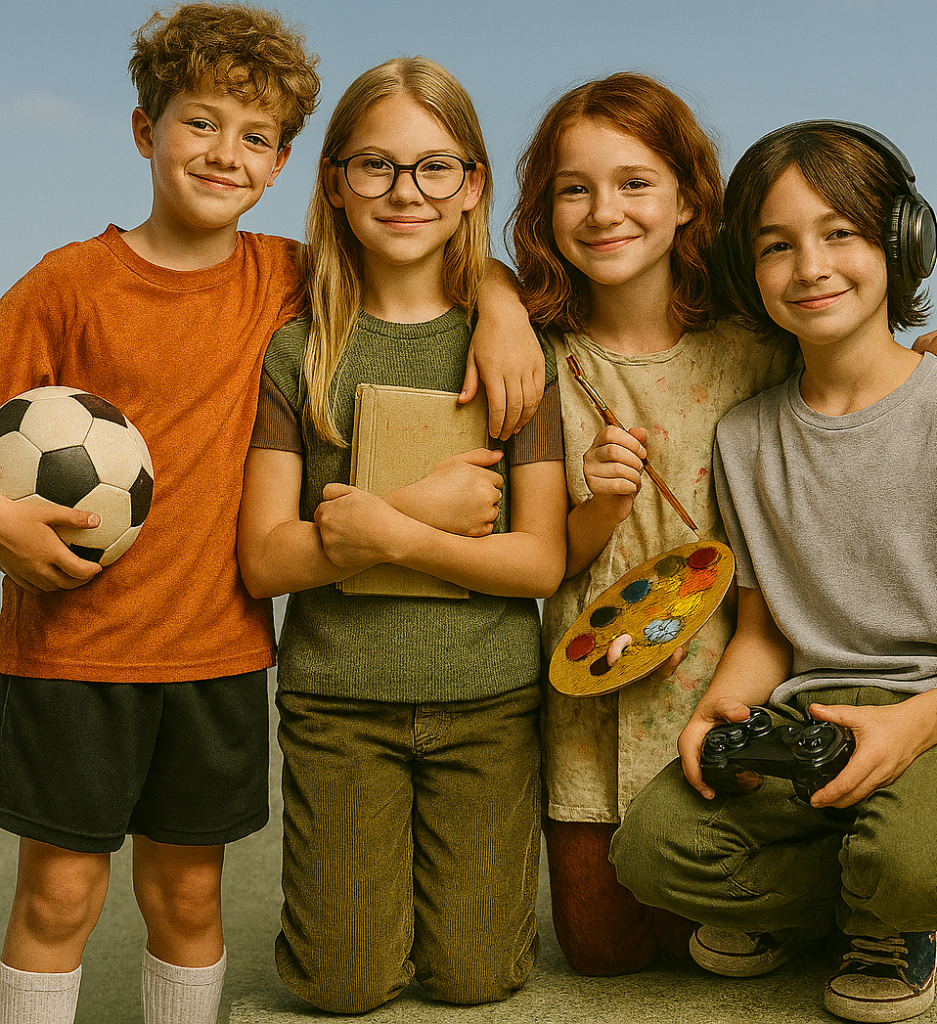
- (Optional): Which friend suits you?
- Share the image below with them and ask them to think about which of these ‘friends’ look the most suited to them and why: If none of them fit their ideal friend then ask them to describe what this friend would:
- Look like
- Be interested in
- Personal qualities they’d have etc.
- Maybe share with your child who your best friend is and why 🙂